
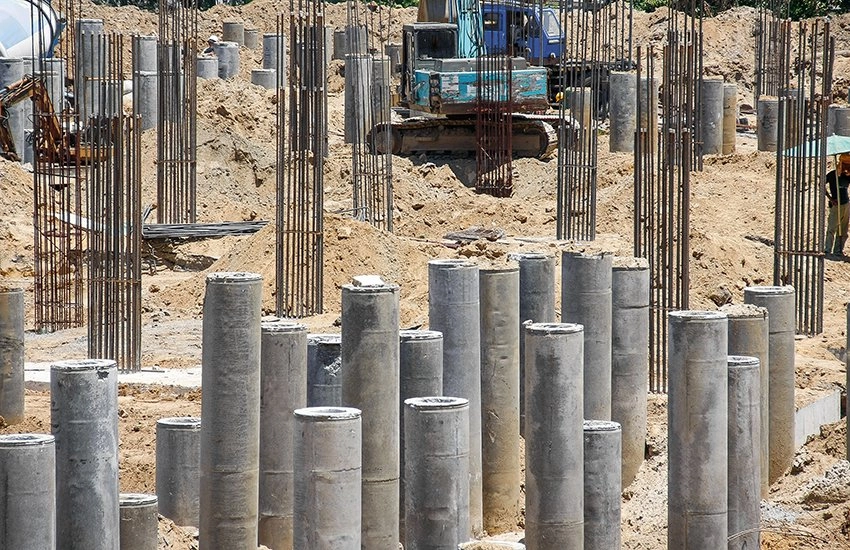
Concrete foundations are critical to the stability and longevity of any structure. Among the many foundation options available, concrete pilings—especially precast concrete piles—stand out as one of the most reliable and versatile solutions. These structural elements transfer loads from buildings and infrastructure deep into the ground, ensuring long-term durability even in challenging soil conditions. In this article, we will explore what concrete piles are, how they are used, and why they are a preferred choice in various construction projects.
What Are Concrete Pilings?
Concrete pilings are long, column-like structural elements that are driven or drilled into the ground to support buildings, bridges, and other heavy structures. Their purpose is to bypass weaker, unstable surface soils and transfer the load to deeper, more stable layers.
Concrete pilings can be created on-site (cast-in-place piles) or manufactured in a controlled environment, then transported and installed (precast concrete piles).
Why Choose Precast Concrete Piles?
Precast concrete piles are widely used due to their strength, consistency, and quality. Because they are manufactured in controlled factory settings, they offer several advantages:
Uniform strength and dimensions
High durability and resistance to corrosion
Faster installation time
Reduced weather dependency
Lower long-term maintenance costs
These benefits make precast concrete piles ideal for projects requiring strong and stable foundations.
Common Uses of Concrete Pilings and Precast Concrete Piles
Concrete pilings are used in a wide range of industries and applications. Here are some of the most common:
1. Commercial and Residential Building Foundations
Large buildings, high-rise apartments, and even smaller residential homes in poor soil conditions often rely on concrete piles. They provide the deep support necessary to prevent settling, cracking, or shifting over time.
2. Bridges and Overpasses
Transportation infrastructure must withstand constant loads and vibration. Precast concrete piles offer the strength needed to support bridge decks and piers, even in wet or unstable soils near rivers or coastlines.
3. Marine and Coastal Structures
Docks, piers, seawalls, and jetties frequently use precast concrete piles due to their resistance to water, corrosion, and marine organisms. Their ability to stand up to harsh environmental conditions makes them ideal for marine construction.
4. Industrial Facilities
Factories, warehouses, and energy plants often require deep foundations due to heavy machinery, storage loads, and dynamic forces. Concrete pilings ensure the structure stays stable and performs safely for decades.
5. Retaining Walls and Slope Stabilization
Concrete piles can be used vertically or at an angle to support retaining walls and prevent soil movement on slopes. This is crucial in areas prone to erosion or landslides.
6. Wind Turbine and Renewable Energy Projects
With the growth of renewable energy, wind turbine foundations often rely on precast concrete piles to handle significant horizontal and vertical loads, especially in soft or coastal ground.
Types of Precast Concrete Piles
There are several forms of precast concrete piles designed for different geotechnical conditions:
Solid square or round piles – Standard and versatile for most applications.
Hollow core piles – Lightweight and suitable for deeper installations.
Prestressed piles – Reinforced with tensioned steel strands for superior strength.
The right type depends on soil conditions, load requirements, and project design.
How Concrete Piles Are Installed
Installation can be done in several ways:
Driven Piles – Piles are hammered into the ground using a hydraulic or diesel hammer.
Vibratory Installation – Vibration is used to insert pilings in softer soils.
Bored or Drilled Piles – A hole is drilled first, then filled with concrete.
Driven precast concrete piles are especially popular due to speed and quality control.
Advantages of Using Concrete Pilings
Concrete piles remain a top foundation method because they offer:
High load-bearing capacity
Long-term durability
Flexibility in design and size
Resistance to moisture, chemicals, and insects
Minimal settlement over time
In difficult soil conditions where shallow foundations fail, concrete pilings provide unmatched stability.
When Are Precast Concrete Piles the Best Option?
Use precast concrete piles when:
The site has weak or inconsistent soil
A fast foundation installation is needed
Quality control is essential
Long term stability is required
The structure will face heavy or dynamic loads
They are especially effective in urban, coastal, industrial, and infrastructure projects.
Concrete pilings, particularly precast concrete piles, play a vital role in the construction industry. They provide strong, reliable foundations for buildings, bridges, marine structures, industrial facilities, and more. Their ability to transfer loads deep into stable ground and resist long-term environmental stress makes them a preferred solution for modern engineering projects.
Whether you are supporting a residential structure or a massive infrastructure development, concrete piles offer the strength, durability, and performance needed to build with confidence.